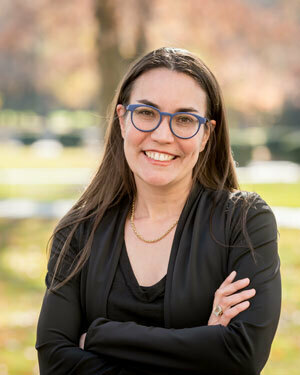
I am associate professor of Political Science at the University of Notre Dame, with a Ph.D. from the from University of California Berkeley. I am also concurrent faculty at the Keough School for Global Affairs. Before joining Notre Dame’s faculty, I was a post-doc at the University of Chicago. My research examines Russia’s post-Soviet political and economic transformation and engages with questions how we study market creation in this context and beyond.
My projects have been supported through research funding from Notre Dame and various external funding sources, including the Swiss National Science Foundation, the European Commission/Marie-Curie Actions, the Neubauer Collegium for Culture and Society, the Swedish Collegium for Advanced Studies, and the Östersjöstiftelsen.
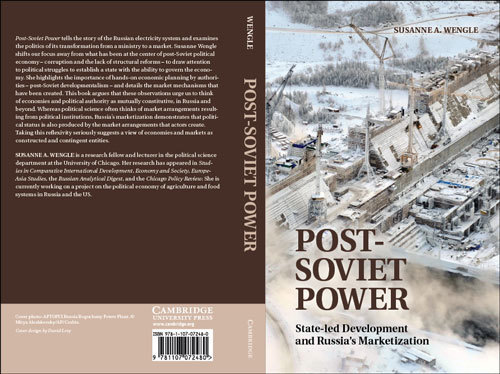
My first book Post-Soviet Power: State-led Development and Russia’s Marketization (2015, Cambridge University Press) examined the political economy of newly created electricity markets in Russia, suggesting that the Russian government is actively involved in shaping market institutions. The book was awarded honorable mention in the 2016 Ed. Hewett Book Prize for an outstanding monograph in political economy, by the Association for Study of Eastern Europe, Eurasian and Slavic Studies (ASEEES).
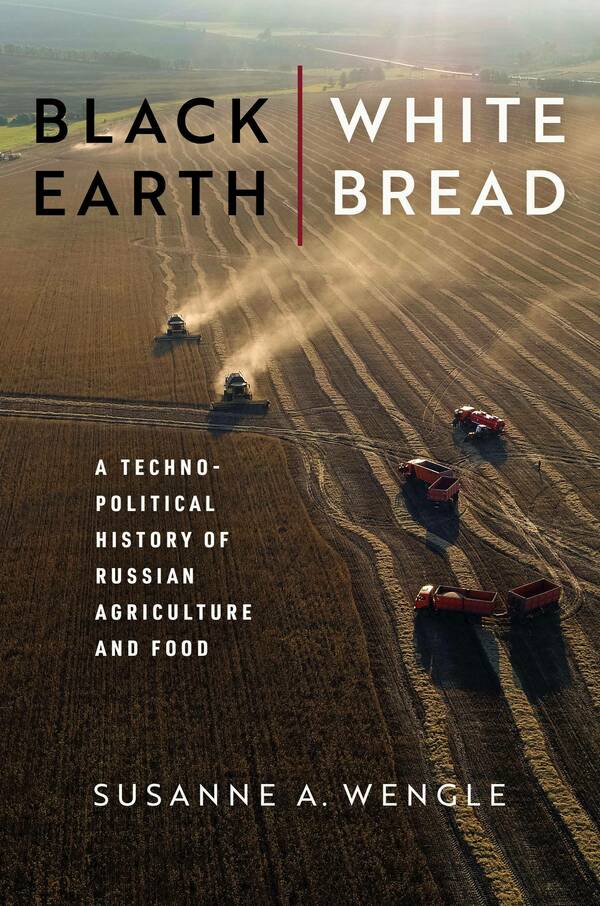
My second book, Black Earth, White Bread; a technopolitical history of Russian Agriculture and Food (University of Wisconsin Press, 2022), documents how politics, rural production and quotidian practices evolved in Soviet and post-Soviet Russia.
"Like all facets of daily life, the food that Russian farms produced and citizens ate—or, in some years, didn’t eat—underwent radical shifts in the century between the Bolshevik Revolution and Vladimir Putin’s presidency. The modernization of agriculture during this time is usually understood in terms of advances in farming methods. Susanne A. Wengle’s important interdisciplinary history of Russia’s agriculture and food systems, however, documents a far more complex story of the interactions between political policies, daily cultural practices, and technological improvements.
Examining governance, production, consumption, nature, and the ensuing vulnerabilities of the agrifood system, Wengle reveals the intended and unintended consequences of Russian agricultural policies since 1917. Ultimately, Black Earth, White Bread calls attention to Russian technopolitics and how macro systems of government impact life on a daily, quotidian level."
I am also the editor of a new textbook on Russian politics, Russian Politics Today: Stability and Fragility (Cambridge University Press; first edition published in 2022, second edition published in 2026).
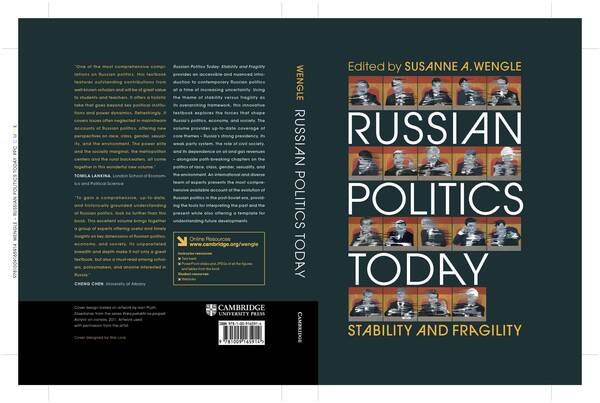
"Russian Politics Today: Stability and Fragility provides an accessible and nuanced introduction to contemporary Russian politics at a time of increasing uncertainty. Using the theme of stability versus fragility as its overarching framework, this innovative textbook explores the forces that shape Russia's politics, economy, and society. The volume provides up-to-date coverage of core themes – Russia's strong presidency, its weak party system, the role of civil society, and its dependence on oil and gas revenues – alongside path-breaking chapters on the politics of race, class, gender, sexuality, and the environment. An international and diverse team of experts presents the most comprehensive available account of the evolution of Russian politics in the post-Soviet era, providing the tools for interpreting the past and the present while also offering a template for understanding future developments."
Apart from electricity and agriculture, I have published on many other aspects of the post-Soviet transformations - on the effects of sanctions, on welfare reforms and on shifting themes in public discourse. My publications have appeared in Governance, Governance and Regulation, Economy and Society, the Journal of Development Studies, Studies in Comparative International Development, Slavic Review, Europe-Asia Studies, Post-Soviet Affairs, Laboratorium, as well as other publications (see research page).